
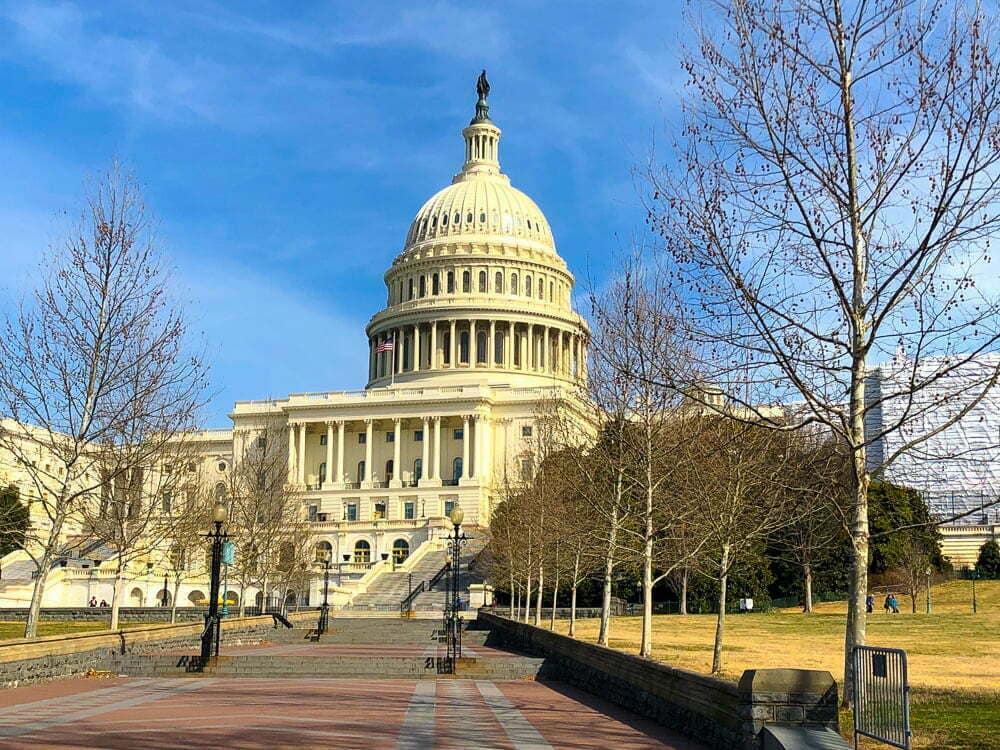

Last Tuesday’s elections marked not only Donald Trump’s return but also a return to full Republican control of Congress. Republicans retook control of the Senate. Yesterday, Decision Desk HQ projected that Republicans would win a majority in the House of Representatives. This signifies the establishment Republican trifecta for the first time since 2019.
We’ll break down what’s next to come when the 119th United States Congress convenes on January 3, 2025, and some of the results from Election Day.
The Senate

Republicans are set to have a 53-47 majority in the Senate. They picked up 4 seats from the Democrats, defeating Senators Sherrod Brown (D-Ohio), Jon Tester (D-Montana), and Bob Casey Jr. (D-Pennsylvania), and picking up retiring Senator Joe Manchin’s open seat in West Virginia. They held on to every other seat, which meant for the first time since 2014 that none of their seats flipped to the Democrats.
Democrats were able to hold their own in several states which Trump carried. Senators Tammy Baldwin (D-Wisconsin) and Jacky Rosen (D-Nevada) outran Kamala Harris and were re-elected narrowly, while Democrats Elissa Slotkin and Ruben Gallego held on to open seats in Michigan and Arizona respectively.
With the size of the GOP majority now determined, expect that most if not all of Trump’s cabinet picks will sail smoothly through the confirmation process.
The focus now turns to who the Republicans will pick as their majority leader. Outgoing Republican leader Mitch McConnell, who has led the Senate Republicans since 2007, announced his retirement from the role earlier this year. A leadership contest has commenced between Senators John Thune (R-South Dakota), John Cornyn (R-Texas), and Rick Scott (R-Florida).

L-R: Cornyn, Thune, and Scott. Source: Getty Images.
John Thune, who currently serves as the Senate Republican whip, is generally viewed as the establishment’s choice to replace McConnell. A longtime member of the Republican leadership team, Thune will likely be a continuation of McConnell’s leadership style, which means institutional stability and gradual legislative progress. Thune, however, has faced criticism from fellow Republicans for not being sufficiently pro-Trump enough. Thune criticized Trump following the January 6th riots and called his efforts to overturn the 2020 election results “inexcusable”. Since then, however, Thune has mended his relationship with the former president.
John Cornyn is also another favorite of the establishment. He held the role of Senate Republican whip from 2013 to 2019 and has been known for his experience in legislative negotiations. This pragmatic side of his, however, makes him less appealing to the Republican Party’s populist wing. Cornyn worked with Democrats on several major pieces of legislation, including a 2021 gun control bill, and has also distanced himself from Trump at times, most notably after the January 6th riots. Just like Thune, though, Cornyn has repaired his relationship with Trump and has supported the former president’s call for fast-tracking judicial nominations.
Rick Scott is the anti-establishment candidate in this race. Staunchly pro-Trump, Scott has vowed to push the “America First” agenda as Senate Majority Leader. Out of the three candidates, he is the closest personally to Trump. Scott has been bolstered by endorsements by fellow Florida Senator Marco Rubio, Elon Musk, and right-wing commentator Tucker Carlson. However, he remains the underdog in this race, as he is less popular among his Senate colleagues and has also less seniority than Thune and Cornyn, who have both been in the Senate since 2005 and 2002 respectively. Scott assumed office in 2019.
All three of these candidates for Republican leader have voiced support for Trump’s call to speed up his Cabinet appointments and maybe even allow the president-elect to carry out recess appointments, which would make it easier for Trump’s cabinet picks to bypass the confirmation process.
As for Democrats, they will probably retain outgoing Senate Majority Leader Chuck Schumer as their caucus leader, at least for now. Schumer will spend the rest of the 118th Congress speedrunning the confirmation of Biden’s judicial nominations. They will have an uphill climb trying to retake the Senate in 2026, as many of the states up for election by then are safely Republican. Expect Republicans to be in the driver’s seat in the Senate for the next four years.
The House

In the House, things are a bit more volatile. Republicans are currently at 219 seats, while Democrats are at 211 seats, with 5 seats still too close to call. The Republican seat count is estimated to be anywhere from 220 to 222, while the Democratic seat count is estimated to be from 213 to 215.
Democrats flipped seven seats so far this election cycle. They flipped seats in Alabama and Louisiana made friendlier to them due to redistricting. In New York, they toppled Representatives Anthony D’Esposito in the 4th district, Marc Molinaro in the 19th district, and Brandon Williams in the 22nd district. They also appear to have unseated Rep. Lori Chavez-DeRemer in Oregon’s 5th district, and just yesterday Rep. Mike Garcia conceded defeat to his Democratic opponent George Whitesides in California’s 27th district.
Republicans also flipped seven seats so far. They gained three out of North Carolina, whose congressional district map was altered to make it more Republican-friendly. They took out Representatives Susan Wild and Matt Cartwright in Pennsylvania’s 7th and 8th districts respectively, and flipped Elissa Slotkin’s open seat in Michigan’s 7th district. On November 10th, Representative Yadira Caraveo conceded defeat to her Republican opponent Gabe Evans in Colorado’s 8th district, marking another flip to the GOP.
Of the remaining 5 uncalled races, 4 are in California and 1 is in Alaska. Democratic congresswoman Mary Peltola is currently trailing her Republican opponent Nick Begich III in Alaska’s lone congressional district. The remaining ballots left to be counted are mostly in rural areas of the state, which would be favorable to Peltola. However, one would rather be Begich right now.
In California, Democratic congressman Jim Costa is having a closer-than-usual race in the 21st district but will probably win once the rest of the ballots get counted. Down in the 47th district, Democrat Dave Min leads his Republican opponent narrowly in his bid to hold the seat for the Democrats. In the Central Valley-based 13th district, Democrat Adam Gray trails Republican congressman John Duarte but is in a pretty good position to take the lead once more ballots are counted. This leaves the 45th district, which features a very tight race between Republican congresswoman Michelle Steel and Democrat Derek Tran. The ballot dumps for Tran thus far have been good, narrowing the race even further. It will be up to the rest of the ballots to determine who comes out on top.
Once all is said and done, there will be a dozen or so Democrats representing congressional districts Trump won this election. If Peltola loses in Alaska, the most Republican-leaning district to be represented by a Democrat would be Maine’s 2nd district, currently represented by Congressman Jared Golden. By contrast, Congressmen Don Bacon of Nebraska’s 2nd district and Brian Fitzpatrick of Pennsylvania’s 1st district are the only two Republicans in congressional districts won by Harris, but this number can change once full results are finalized throughout the country.
However big the Republican majority is set to be, it is set to narrow almost immediately. Donald Trump picked Congresswoman Elise Stefanik of New York’s 21st district as his Ambassador to the UN and Congressman Mike Waltz of Florida’s 6th district as his National Security Advisor. More Republican members of Congress may be picked as well. Once they assume those offices, their congressional seats will be vacated and the narrow GOP majority will be even narrower. This will make passing legislation very difficult, at least until special elections are held for the two seats.
Republicans will probably vote to retain Mike Johnson as their leader and therefore Speaker of the House, although there have been grumblings from some conservatives about his cooperation with Democrats in the past. On the other hand, Democrats will likely retain Hakeem Jeffries as their caucus leader.
Conclusion
Time will tell whether Trump’s agenda will get passed through Congress. Not all of it will pass, especially through the very narrow House majority. On the other hand, Trump’s Cabinet picks will easily be confirmed by the Senate, whose Republican members are more pro-Trump than ever before. This Senate will also probably swiftly confirm hundreds of Trump-appointed judges, possibly leading to a conservative majority within the federal judiciary.
Now that the GOP has full control of Congress, it will be interesting to observe how much of Trump’s agenda they can get done. The 119th Congress will be interesting to watch.

Emil Ordonez, a political science major at Fordham University, is the founder and editor-in-chief of Polinsights. He has been deeply passionate about politics and history since learning every U.S. President at the age of five. He was compelled to start this blog after meeting many people who were misinformed or had become apathetic about how society worked. He hopes to provide factual knowledge and insights that will encourage people, especially the young, to get more engaged in their respective communities. In his free time, he edits for Wikipedia and makes maps for elections. He aspires to work in Congress or even the White House in the future.
Leave a Reply