
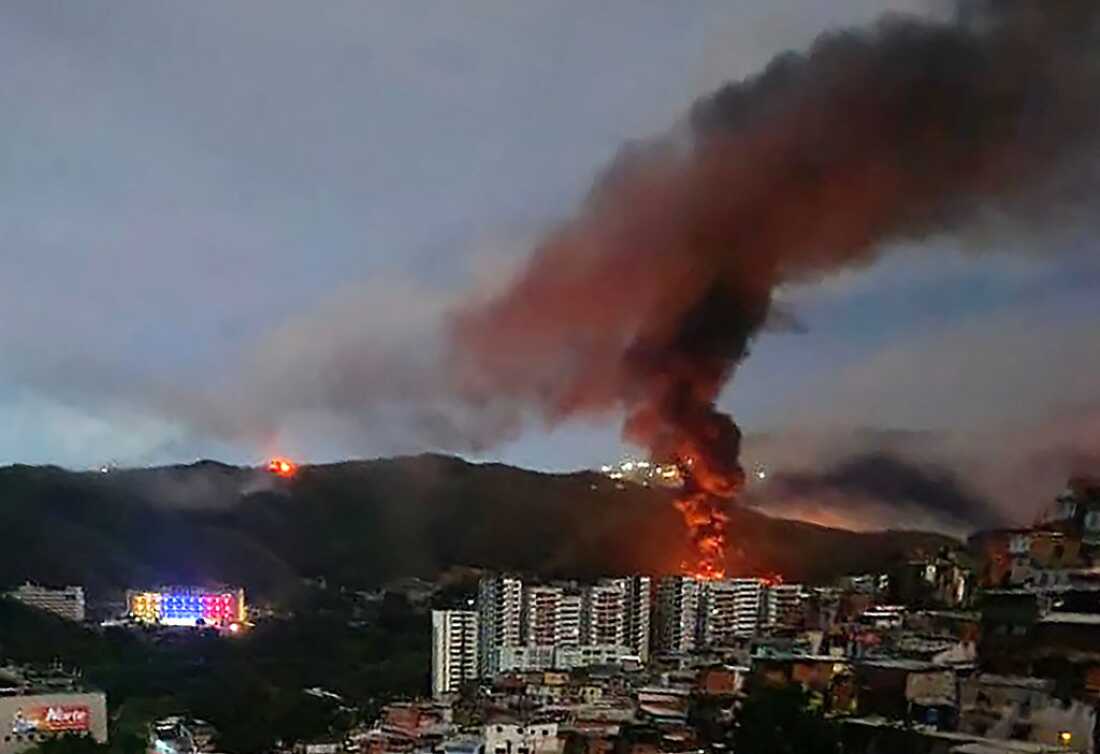

A few hours past midnight on January 3, 2026, the United States launched surprise airstrikes under the codename Operation Absolute Resolve, targeting multiple locations across northern Venezuela, including the capital city of Caracas. While doing so, U.S. special forces carried out a helicopter landing operation at the residence of Venezuelan President Nicolas Maduro, capturing him and his wife. The Maduros, who are under indictment in the United States on drug trafficking charges, were then flown to the United States, where they will face their charges in court. In a news conference later that morning, President Trump declared that the United States would “run” Venezuela until there is a “safe, proper, and judicious transition,” and that the U.S. and American companies would be involved in the Venezuelan oil industry and sell large amounts of oil to other countries.
This remarkable series of events has brought an end to the dictatorship of Nicolas Maduro. For much of his presidency since 2013, Maduro has ruled by decree, ignoring the legislature or any checks and balances. His dictatorship has been marked by electoral fraud, human rights abuses, and corruption, and as a result, the people of Venezuela have suffered. The Venezuelan economy, once among the richest in Latin America, is now one of the poorest. Many simply could not afford to live in Maduro’s Venezuela. Thousands of Venezuelans who have tried to speak out against Maduro’s tyrannical regime have been silenced, and millions have fled the country. All the while, the Venezuelan dictator allegedly ran an underground drug cartel that smuggled illegal drugs to the rest of the Americas. Until today, Maduro has continued to cling to power, despite lacking a legitimate mandate. The end of the Maduro regime represents an opportunity for the Venezuelan people to be free at last.
However, the method in which Maduro was removed raises legal concerns. International law prohibits the use of force in international relations except when authorized by the U.N. Security Council or when done in self-defense. None of these exceptions were met, as drug trafficking and gang violence do not fit the accepted international standard of what would justify a military response. It is likely, however, that the U.S. will not face any legal consequences for its actions, given the lack of enforcement mechanisms in international law. Additionally, President Trump did not notify Congress before starting this operation, as should be the norm. Even Trump’s chief of staff, Susie Wiles, admitted that they would need congressional authorization to carry out an operation of this magnitude.
Trump’s suggestion that the U.S. would run the country and sell its oil reserves also contradicts the claim being made by the administration that it was a law enforcement operation. His suggestions appear to be borderline imperialism. How the U.S. would “run” Venezuela remains uncertain, as Maduro’s vice president, Delcy Rodriguez, has become the acting president and calls for Maduro’s release, and there is currently no U.S. presence in the country. A U.S. occupation of Venezuela risks dragging the United States into a long-term conflict. We do not need another repeat of the Iraq War. The people of Venezuela should be allowed to determine their own fate.
The situation is evolving very rapidly, and we will see how this conflict will be resolved. Venezuela runs the risk of becoming another Libya or another Iraq if the U.S. does not handle this situation properly. We do not need any more foreign policy blunders. At the very least, the removal of Maduro should be celebrated by all. One can hope that the Venezuelan people will finally be able to take ownership of their own destiny and finally prosper in a post-Maduro Venezuela.

Emil Ordonez, a political science major at Fordham University, is the founder and editor-in-chief of Polinsights. He has been deeply passionate about politics and history since learning every U.S. President at the age of five. He was compelled to start this blog after meeting many people who were misinformed or had become apathetic about how society worked. He hopes to provide factual knowledge and insights that will encourage people, especially the young, to get more engaged in their respective communities. In his free time, he edits for Wikipedia and makes maps for elections. He aspires to work in Congress or even the White House in the future.
Leave a Reply