
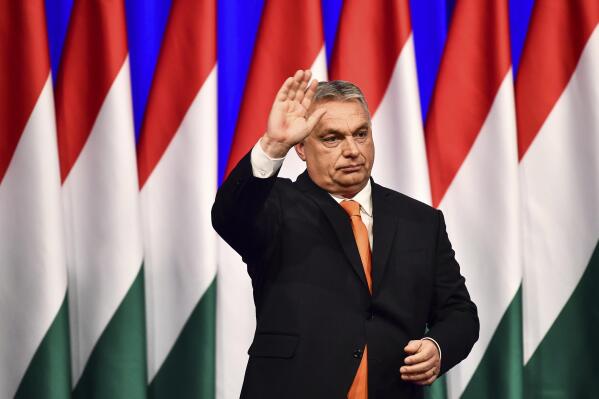

On Sunday, April 12, 2026, Hungarian Prime Minister Viktor Orban conceded defeat in a high-stakes election that attracted massive levels of turnout, with the opposition claiming a supermajority in the country’s parliament. Opposition leader Peter Magyar from the center-right is set to become the next Prime Minister of Hungary, replacing Orban, who has been in power for the last sixteen years. Voters had become tired of the corruption in Orban’s government and the worsening economy. This represents the end of an era for Hungary and a rebuke to one of the West’s most autocratic leaders.
An icon for the global far-right, Orban was a prominent ally of U.S. President Donald Trump. The MAGA movement in the United States had openly supported Orban’s anti-migration and Christian nationalist policies as a model for governing. Trump’s vice president, J.D. Vance, had even joined Orban in Budapest on Tuesday for a pre-election rally to boost the latter’s chances.

Orban and Vance at a rally in Budapest on Tuesday. Source: Getty Images
Orban’s loss is also a loss for Russia, as President Vladimir Putin and Orban maintained close ties even after the invasion of Ukraine. Russia had actively meddled in this election in support of Orban, even considering staging an assassination attempt to boost Orban’s flailing polling numbers. Hungary under Orban had been a key ally of Russia in the European Union, blocking and delaying E.U. aid to Ukraine and opposing stronger military support.
With Orban on his way out, the European Union has the potential to be more united than ever. Over the years, Orban’s government has been at odds with Brussels as concerns in the E.U. grew over the erosion of democratic institutions, corruption, and the implementation of anti-migration policies. Orban’s defeat is a setback for the Euroskeptic forces throughout the continent.
As the opposition seems poised to claim a two-thirds supermajority in the Hungarian parliament, this will allow it to potentially undo the constitutional amendments instituted by Orban’s government that gutted Hungary’s judicial system, banned abortions and gay marriage, and eroded democracy and the free press in the country. In any case, a new era has come to Hungary, and has caused a setback for anti-globalist movement. ine. Russia had actively meddled in this election in support of Orban, even considering staging an assassination attempt to boost Orban’s flailing polling numbers. Hungary under Orban had been a key ally of Russia in the European Union, blocking and delaying E.U. aid to Ukraine and opposing stronger military support.
With Orban on his way out, the European Union has the potential to be more united than ever. Over the years, Orban’s government has been at odds with Brussels as concerns in the E.U. grew over the erosion of democratic institutions, corruption, and the implementation of anti-migration policies. Orban’s defeat is a setback for the Euroskeptic forces throughout the continent.
As the opposition seems poised to claim a two-thirds supermajority in the Hungarian parliament, this will allow it to potentially undo the constitutional amendments instituted by Orban’s government that gutted Hungary’s judicial system, banned abortions and gay marriage, and eroded democracy and the free press in the country. In any case, a new era has come to Hungary, and has caused a setback for anti-globalist movement.

Emil Ordonez, a political science major at Fordham University, is the founder and editor-in-chief of Polinsights. He has been deeply passionate about politics and history since learning every U.S. President at the age of five. He was compelled to start this blog after meeting many people who were misinformed or had become apathetic about how society worked. He hopes to provide factual knowledge and insights that will encourage people, especially the young, to get more engaged in their respective communities. In his free time, he edits for Wikipedia and makes maps for elections. He aspires to work in Congress or even the White House in the future.
Leave a Reply